Not All Subtitles Are Created Equal: The Hidden Bias Shaping How You Experience Asian Films
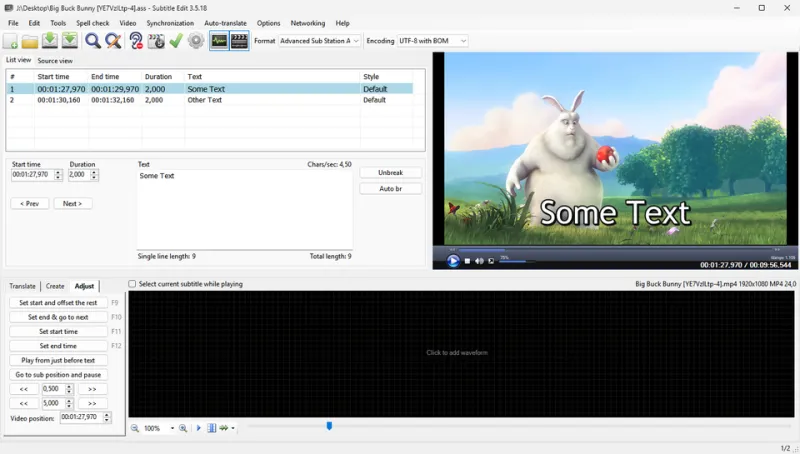
Photo: Original: Nikolaj Lynge Olsson Photograph: Sirios Wiki, GPLv2, via Wikimedia Commons
There's a moment that Vietnamese-American viewers know all too well. You're watching a film from back home — maybe a romantic drama set in Saigon, maybe a horror film out of the Mekong Delta — and something in the subtitles just feels off. A joke lands flat. A line of poetry reads like a grocery list. A term of endearment gets translated as a generic "dear" when you know, in your bones, it means something far more layered than that.
Now compare that to watching a French or Italian film on the same platform. The subtitles breathe. They carry rhythm. The translators clearly had time — and budget — to get it right.
This isn't a coincidence. It's a pattern. And it runs deep.
The Subtitle Economy Nobody Talks About
Streaming platforms don't spend the same amount on every subtitle job. That's not a secret, exactly, but it's rarely discussed openly. Translation work is contracted out, often to third-party localization firms, and the rates vary wildly depending on how much the platform values a given title.
For a prestige European import — think a buzzy French thriller or an award-nominated Italian drama — platforms are willing to pay for experienced translators who specialize in that language pair, who understand cultural context, and who have time to do multiple revision passes. For a Thai action film or a Filipino family drama acquired at a lower licensing cost? The budget gets squeezed. Turnaround times get brutal. And the quality shows.
One freelance translator who has worked on Southeast Asian content for multiple streaming platforms described the situation bluntly: "You'll get a file, a deadline of 48 to 72 hours for a feature-length film, and a rate that doesn't account for the complexity of the language. Vietnamese, for example, has tonal nuance that takes real time to render meaningfully in English. When you're being paid by the minute of runtime and you're racing a deadline, shortcuts happen."
Those shortcuts are what diaspora audiences feel every time a subtitle makes them wince.
Why European Gets the White-Glove Treatment
Part of the disparity comes down to legacy. European cinema has had decades of institutional support in American cultural spaces — film schools, art house theaters, the Criterion Collection, Oscar campaigns with real marketing dollars behind them. There's an established market, an established critical apparatus, and an established expectation of quality that platforms have to meet.
Asian cinema — particularly from Southeast Asia — is still fighting for that recognition in mainstream American spaces. And when a platform acquires a Vietnamese or Filipino film, it often does so with lower expectations for viewership, which translates directly into lower investment across every production element, including subtitles.
"There's an implicit hierarchy," says one localization project manager who asked not to be named. "European content is treated like it deserves to be understood. A lot of Asian content, especially from markets that aren't Korea or Japan, is treated like a checkbox. It's there so the platform can say it has diversity. The resources don't follow."
Korean and Japanese films have made some gains — the global success of Parasite and the K-drama boom pushed platforms to invest more in Korean localization specifically. But Vietnamese, Thai, Filipino, Indonesian, and other Southeast Asian languages remain in a second tier, their translators underpaid and their audiences underserved.
What Bad Subtitles Actually Cost
This isn't just an aesthetic complaint. For diaspora audiences, subtitles are often the bridge between generations. A Vietnamese-American viewer watching a film with their American-born kids, or sharing a Thai film with a partner who doesn't speak the language, is depending on those subtitles to carry the full weight of the story. When they fail, the film fails — not because of any fault in the filmmaking, but because of a budgetary decision made thousands of miles away.
Bad subtitles also distort critical reception. When a Vietnamese film gets reviewed by American critics who only experienced it through clunky, rushed English text, the review reflects the translation as much as it reflects the film. Performances get called "flat" when the issue is that the subtitle missed the emotional register entirely. Dialogue gets called "stilted" when it was actually poetic in the original.
The film takes the hit. The translator's budget decision doesn't.
The Fans Who Noticed First
Diaspora communities have been quietly aware of this problem for years. Online forums dedicated to Vietnamese cinema, Filipino film groups on Facebook, Thai film fan communities on Reddit — they've all developed informal networks for flagging bad subtitle jobs and, in some cases, creating their own corrections.
Some viewers have taken to watching with the official subtitles off entirely, relying on their partial language knowledge plus community-shared translation notes posted in real time. Others simply wait for fan-made subtitle files to circulate before watching a new acquisition.
The fact that audiences have built workarounds is a sign of how normalized the problem has become. It shouldn't be normal.
What a Fix Would Actually Look Like
The solution isn't complicated in theory, even if it's costly in practice. Paying translators fair rates and realistic timelines. Hiring consultants from the diaspora communities who understand the cultural context, not just the literal language. Treating Southeast Asian language pairs with the same rigor applied to European ones.
Some smaller, niche platforms have started doing this — partly because their audiences are knowledgeable enough to call them out when they don't, and partly because they've built their brand identity around quality rather than volume. But the major players, with their enormous libraries and their algorithmic churn, haven't felt enough pressure to change.
Until they do, every rushed subtitle file is a small act of erasure — a film that made it onto a platform but didn't quite make it to its audience.